
When Should You Consult a Cardiologist?
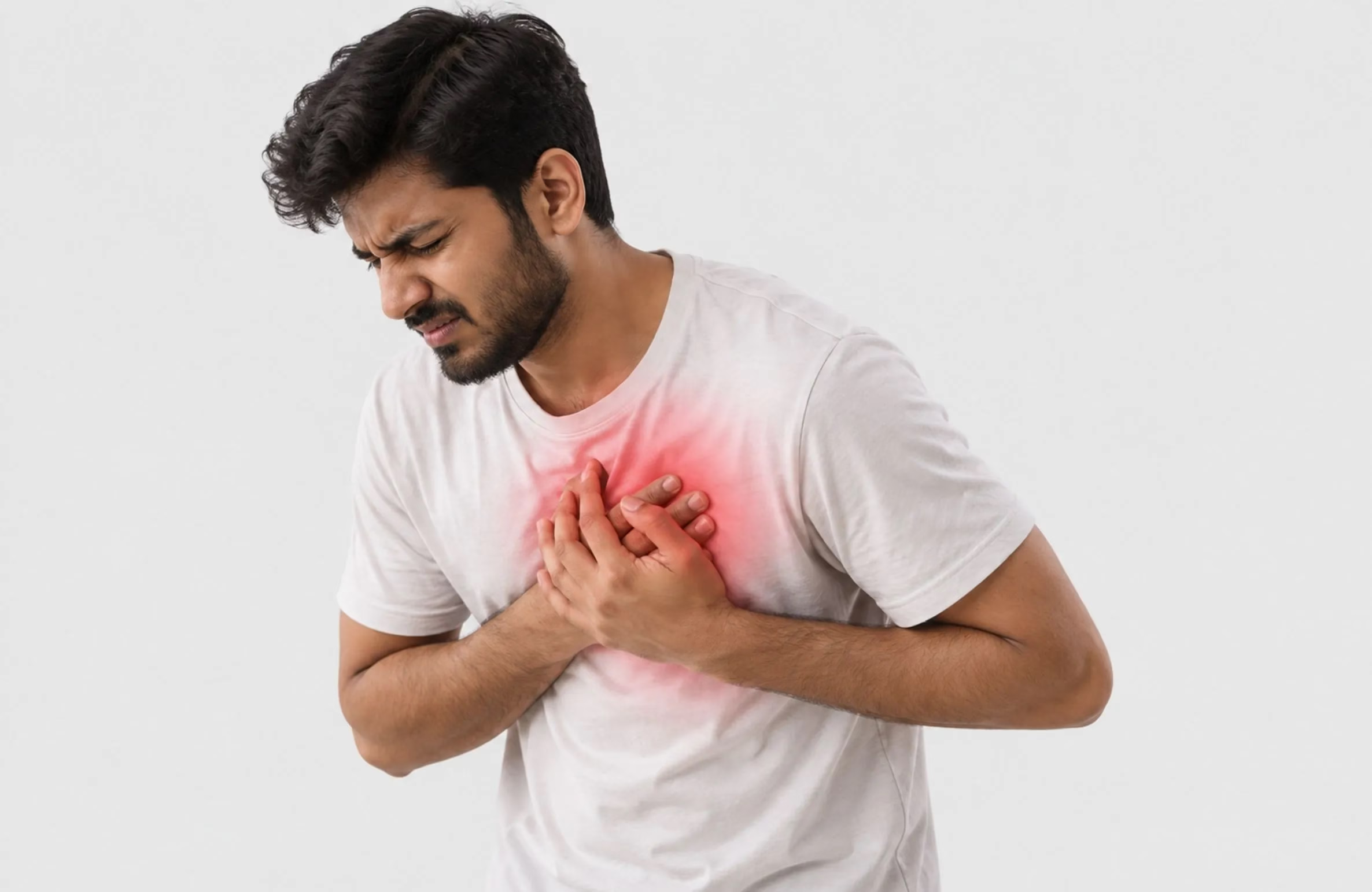
The heart is a silent organ of our body, working 24/7. Therefore, any change in its activity, be it unusual shortness of breath, accelerated heartbeat, unexpected tiredness, or chest pain, may not only be confusing but also require the attention of a specialist.
This is why detecting the early signs of heart disease is crucial.
At Jade Clinics, we believe heart care does not need to happen exclusively when something goes wrong. Routine monitoring, assessing your risks, and listening to your body are all important steps in cardiovascular healthcare.
If you are interested in the early symptoms of heart problems and trying to find out when to see a cardiologist or when to consult a cardiologist in Kokapet, then this guide will be helpful for you.
It is vital to understand that heart-related symptoms can be due to several factors, and it does not necessarily mean that you have any problems with your heart. Nevertheless, in case you experience new and/or unusual symptoms, it is best to address your concerns with your doctor immediately.
Not every heart condition has the same symptoms. Different types of cardiovascular diseases exhibit different symptoms. One person may feel clear symptoms such as chest pain or difficulty breathing. Others may experience more subtle symptoms like being unable to exercise as usual or unusual tiredness, dizziness, or palpitations.
Some typical symptoms of heart problems include:
These symptoms do not necessarily indicate any heart disease. For example, shortness of breath can happen due to problems other than heart problems. Tiredness may occur due to various causes. However, if a new symptom appears or becomes more severe, a doctor needs to investigate the cause.
One of the symptoms most associated with heart conditions is chest pain, and it is well justified.
In case of heart conditions, chest pain usually manifests as:
Pain can sometimes appear during exercise or stress and can be relieved after resting. However, chest pain has various causes depending on the organ affected by the problem; it can be the heart, lungs, digestive system, or muscles and bones.
That is why you should not try diagnosing your condition based on your symptoms only.
What causes of chest pain need emergency medical care? Unusual or new chest pain that is severe and comes with such symptoms as breathing difficulties, sweating, nausea, feeling dizzy, or pain extending to the arm, back, jaw, or neck can be an indicator of a heart attack.
American Heart Association recommends seeking emergency treatment when experiencing the symptoms of a heart attack. Symptoms can also alternate over time and do not have to persist all the time. In case you suspect that you are having a heart attack, don't wait until you have a scheduled cardiology appointment; go to the hospital right away.
Are you experiencing excessive difficulty breathing during an activity that you usually find easy?
Examples include:
Difficulties breathing can result from a variety of different factors; however, breathing difficulties can be linked to heart problems as well.
As described by the Mayo Clinic, coronary artery disease is one reason for breathing difficulties because of a lack of oxygen-filled blood reaching the heart. Breathing difficulties that come on suddenly and unexpectedly should always be discussed with a doctor.
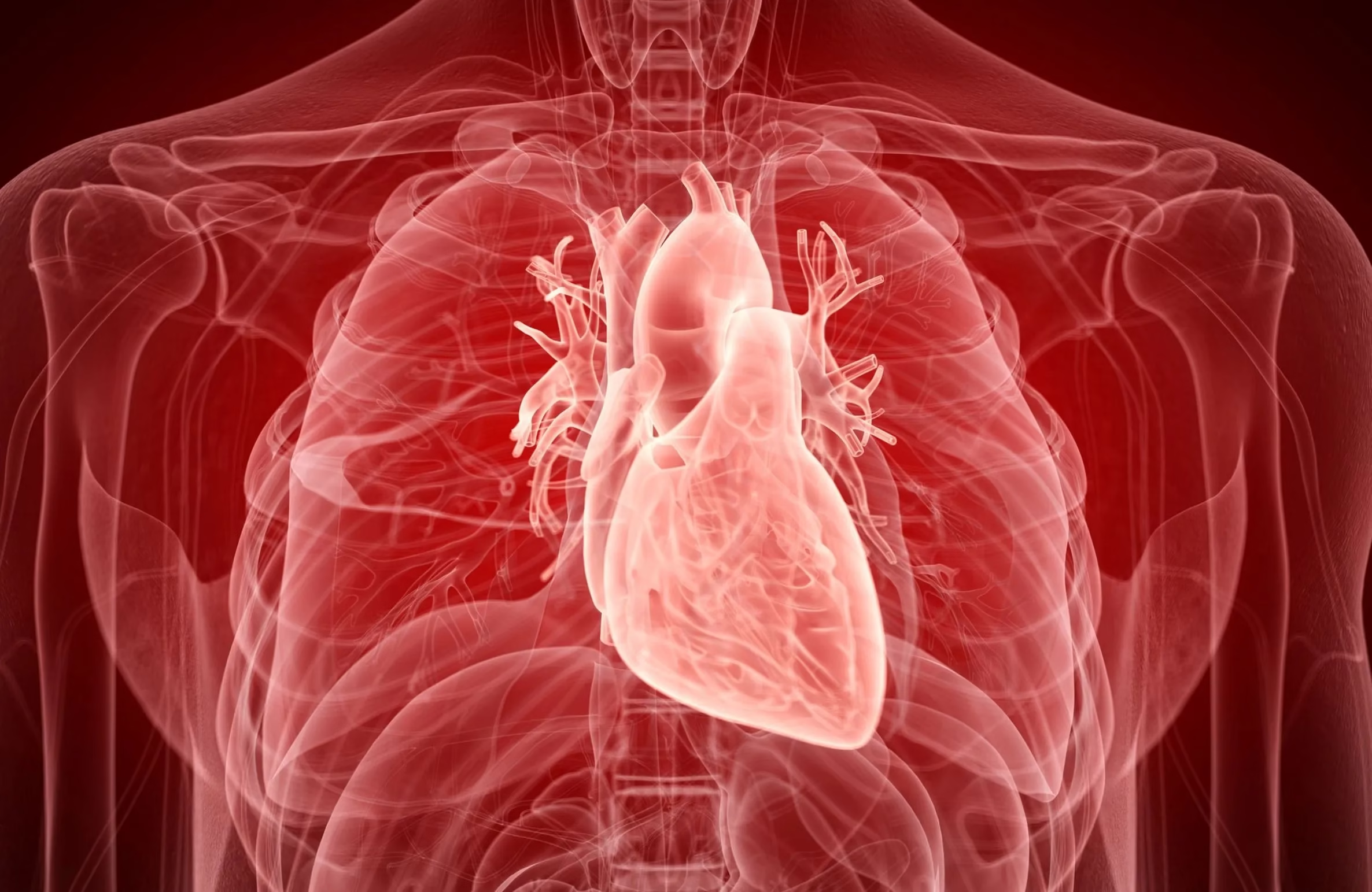
Discuss sudden or unexpected breathing difficulties with your doctor to rule out underlying heart conditions.
Ever experienced your heart beating:
This experience is usually termed heart palpitations.
Palpitations may happen due to many factors such as stress, caffeine, sleep deprivation, or specific medication. However, recurring or inexplicable palpitations may be linked to an abnormal heart rhythm called an arrhythmia.
An arrhythmia may present itself with symptoms such as rapid heartbeats, lightheadedness, loss of consciousness, chest pain, or difficulty breathing.
It does not mean that each time your heart beats rapidly, you must be alarmed. However, in cases where palpitations recur, persist longer than usual, or are associated with chest pain, loss of consciousness, or significant difficulty breathing, seek medical help immediately.
“I'm just tired.” It sounds like something that happens often, yet sometimes unusual fatigue is a symptom worth considering.
If you feel extremely fatigued even though you are well-rested, or the things that used to be easy suddenly make you extremely tired, it is worth talking about it with your doctor.
Fatigue may have many different causes – lack of sleep, anemia, problems with thyroid glands, infections, stress, and many other diseases.
Fatigue may also accompany some heart diseases. According to Mayo Clinic, unusual fatigue can happen when the heart does not provide enough blood for the body's needs, especially in the case of coronary artery disease. The important point here is not to take unusual fatigue as a sign of heart disease, but not to ignore it either.
Temporary dizziness could have a straightforward cause, such as dehydration or rising up suddenly.
However, repeated episodes of dizziness, lightheadedness or syncope might indicate some underlying cardiovascular condition, especially a rhythm problem in the heart or any other blood flow abnormality. Any cases of loss of consciousness, especially those associated with chest pain, palpitations, or difficulty breathing, need a doctor’s attention.
Dizziness and syncope are among the possible symptoms that are experienced in some arrhythmias and other heart conditions, according to Mayo Clinic. A sudden loss of consciousness, especially while engaging in exercise, needs immediate medical attention.
Are your ankles or feet seeming puffy compared to how they usually look?
Swelling, also known as oedema, may have various causes. Staying in one position for too long and other health conditions can lead to it. Nevertheless, swelling in the legs, ankles or feet may also happen when some cardiovascular problems are present.
According to Mayo Clinic, swelling in the legs, ankles and feet can be listed amongst the symptoms that may be connected to certain heart diseases, such as heart failure and others. If the swelling is consistent, not explained, and goes along with breathlessness or inability to exercise, a medical examination will clarify the reason.
This sign is often easily missed. Maybe you could climb two flights of stairs without any effort, but now you find yourself needing to pause halfway.
Perhaps your walk suddenly feels more exhausting than usual. Exercise tolerance decreases for a variety of reasons. However, it’s important to mention to a doctor if there has been an evident and unexpected change in your exercise tolerance.
Exercise tolerance is affected by various factors, including your heart, lungs, muscles, sleep, medication, etc. An evaluation of your heart condition can be helpful to rule out any cardiovascular problems.
Pain in the heart region does not necessarily remain confined to the chest.
In case of a heart attack, the pain can extend to or emanate from such regions as:
The American Heart Association counts all of these as heart attack symptoms. It is especially significant in light of the fact that a person might take these symptoms for muscle pain, indigestion, or something minor.
If this pain is sudden and unexplained, along with chest pain, shortness of breath, sweating, nausea, or dizziness, a medical emergency is necessary.
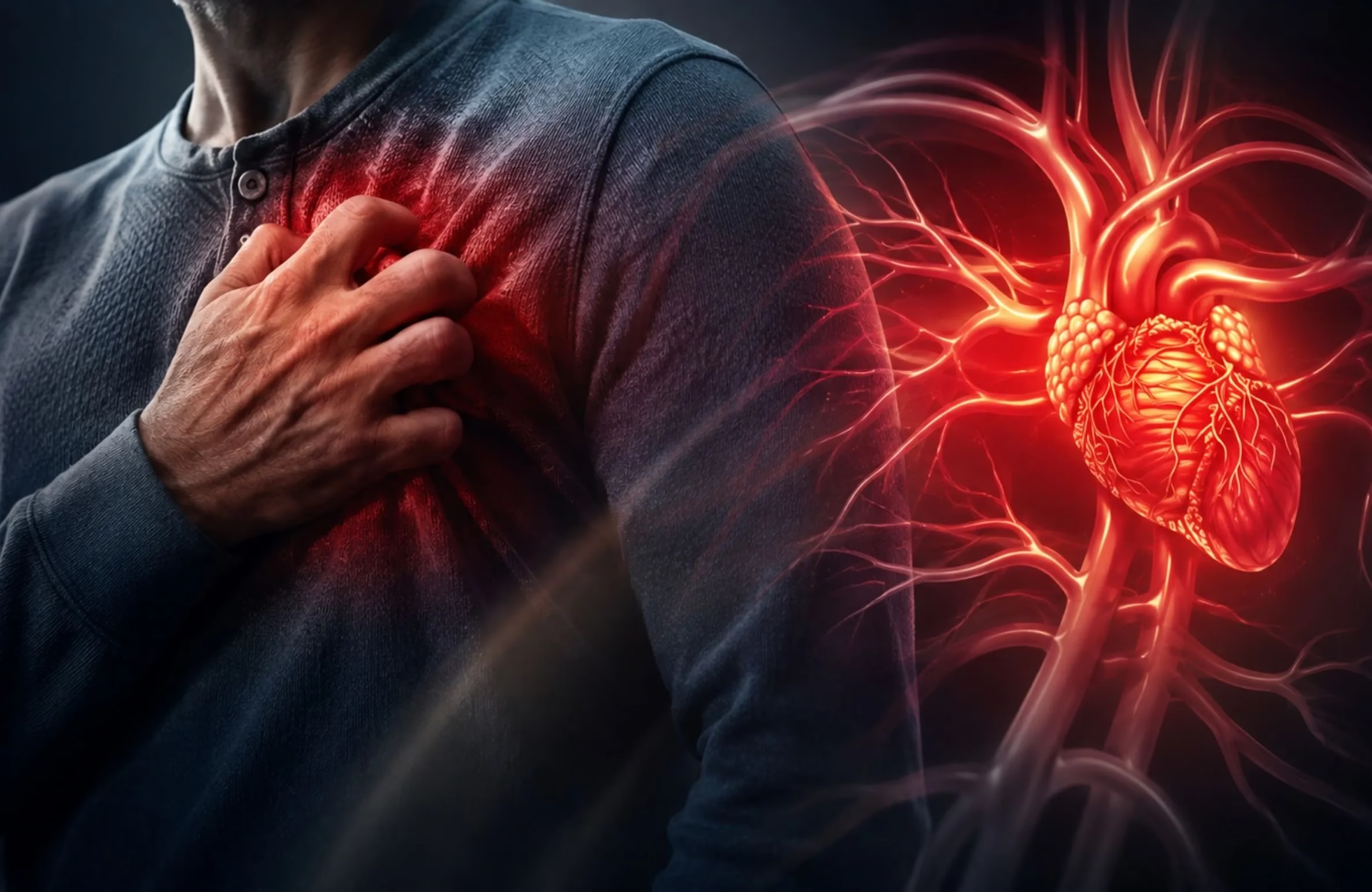
Do not ignore discomfort that radiates from your chest to your arms, back, or jaw.
Yes. It is important to know this since all people do not experience a heart problem in the same manner.
While chest pain could still be a common symptom of a heart attack, the American Heart Association says that women could also have some symptoms, such as breathlessness, indigestion, fatigue, discomfort in the back or jaw area, and feeling dizzy.
People who are older and those with illnesses like diabetes could also have uncommon symptoms. This is the reason why concentrating on only one symptom could be misleading. Look out for changes in your body, especially when you have more than one symptom.
You do not need to experience any major heart-related event to consult a cardiologist. Consultation with a cardiologist may be required in case of:
The cardiologist will examine the symptoms, taking into account your medical background, lifestyle, family background, and any additional risk factors. The purpose of the consultation is not only to detect heart disease. The idea is also to identify the risks.
It is crucial. Cardiology consultations could be right for several recurrent and/or unexplained complaints. But signs of a heart attack require emergency medical intervention, not consultations.
Consultations of emergency medical services should be sought without delay if you have:
The American Heart Association stresses that heart attack symptoms might be mild or slowly developing and encourages seeking emergency help instead of waiting to see if symptoms will go away. If you think you had a heart attack, get emergency help immediately.
Sometimes, the warning signs for heart disease can arise even before there is any symptom that appears. This is where knowing one's cardiovascular risk becomes important.
The risk factors may include:
While some of the factors can be changed through lifestyle choices and medical interventions, others like advanced age and family history cannot be altered. Regular checkups can detect certain risk factors like hypertension or high cholesterol levels before they lead to cardiovascular disease.
Yes, sometimes. This is because not all cardiovascular problems present visible symptoms initially. In some cases, high blood pressure and high levels of cholesterol do not manifest symptoms, although they may be risk factors for cardiovascular disorders.
Health screening is therefore beneficial, especially for individuals who have established risk factors for heart disease or those with a family history of heart disease.
Consult a cardiologist about how you can be monitored. A heart screening is not just about investigating symptoms; it is also about your cardiovascular risks.
In terms of heart health, waiting until symptoms become too severe might not be the optimal approach in all cases. There are several types of heart diseases that can be detected or treated early on by means of medical assessment and tests.
As mentioned by the Mayo Clinic, heart disease can sometimes be detected at an early stage during routine health checks, with symptoms and appropriate assessments depending on the specific type of disease.
The Cardiology Department of Jade Clinics is focused on early detection and individualized treatment plans for each patient based on their symptoms and needs.
Being aware of the early signs of cardiovascular diseases doesn’t necessarily mean being worried that every unfamiliar feeling is a sign of heart disease.
What it really means is knowing when something needs checking.
Pain or pressure in the chest, shortness of breath, irregular heartbeat, unexpected exhaustion, dizziness, fainting, swelling, and inability to exercise as much as before. Should any of these symptoms be new, frequent, or unclear, consult a medical professional. And if you think you’re having a heart attack, do not wait for a cardiology consultation; go straight to the hospital.
Here at Jade Clinics, our Cardiology specialists will help you learn more about your heart. When it comes to your heart, it is better to know when to seek help.
In search of a cardiologist in Kokapet or a cardiology clinic in Kokapet?
Visit Jade Clinics to book an appointment and have an in-depth conversation regarding your condition and risk factors with our Cardiologist Team.
Address:
Jade Clinics
3rd Floor, KFC Building, MN CRUX, Kokapet, Gandipet, Hyderabad, Telangana 500075
Contact us: 9505900500 | 9281430500